
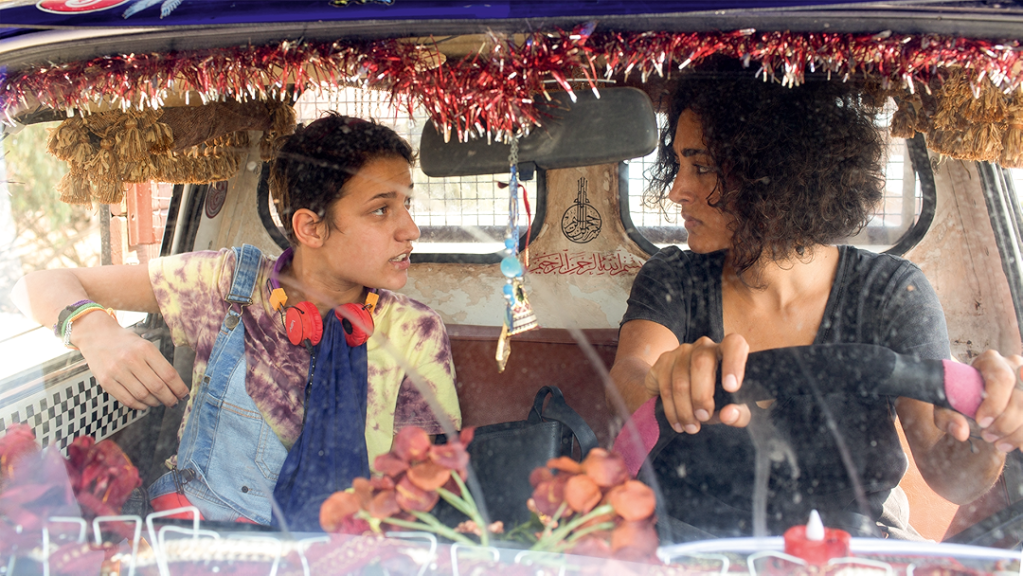
This week’s movie was a long time coming, and finally, that day has arrived.
The old saying that “where there’s a will, there’s a way” proved true—at least in this case.
Welcome to another weekly TV and movie review.
If this is your first time here, join the discussion by leaving a comment and/or a like.
If you’re a returning patron, welcome back!
Likes and comments are always appreciated.
This week, we’ll be looking at Arab Blues.
Love at the First Blow
Set in Tunisia, Selma Derwich—or Madam Selma—has returned home after spending years in France.
She quickly realizes she’s not in Kansas anymore, and if she wants to survive, she’ll have to learn how to play nice with the locals.
Personal space is the first thing to go when she’s forced to take an alcohol test without a breathalyzer.
A swoon-worthy almost-kiss soon sparks the affection between her and Officer Naim.
Though her work as a psychoanalyst is indeed valuable, even Selma can’t ignore the law forever.
Despite her prestigious French education, practicing without the proper licenses is still frowned upon.
As a result, she’s forced to deal with bureaucrats whose answer to everything seems to be:
“Inshallah.”
At least she was smart enough not to piss them off.
Personally, I would’ve packed up my stuff at the first sign of trouble.
From the very beginning, her family kept telling her she wouldn’t last.
But of course, through a combination of stubbornness, determination, and movie logic, she succeeds in establishing her practice.
A Political Prisoner, a Baker, and a Hairdresser
What do they all have in common?
Problems.
Ferid Oueslati, a forty-two-year-old man who spent five years in prison after confessing to something he didn’t do, no longer trusts people.
Babya, a successful hairdresser, is happily married and loves her children, but she despises her mother-in-law to the extent of fantasizing about murdering her.
Only in her dreams, of course.
Then there’s Raouf, a baker who was mishandled as a child and continues to struggle with his sense of identity.
One thing I appreciated about the film is that it treats everyone’s problems as valid.
Whether it’s political trauma, family tension, or personal confusion, each person enters Selma’s office carrying some kind of burden.
Some are heavier than others, but burdens all the same.
I also found myself sympathizing with Selma’s niece, Olfa.
Like her, I sometimes dream about breaking out of my routine and seeing more of the world for myself.
That being said, I don’t think I’d be bold enough to marry my gay best friend just to escape.
But points for creativity, I suppose.
Lol.
Overall, Arab Blues wasn’t the funniest comedy I’ve ever seen, but I enjoyed the way it explored the struggles people carry around beneath the surface.
Sometimes people don’t need answers.
Sometimes they just need someone willing to listen.
Anypoops, I give Arab Blues a fresh rose straight out of Queen Mirai’s private garden.
Leave a Reply