
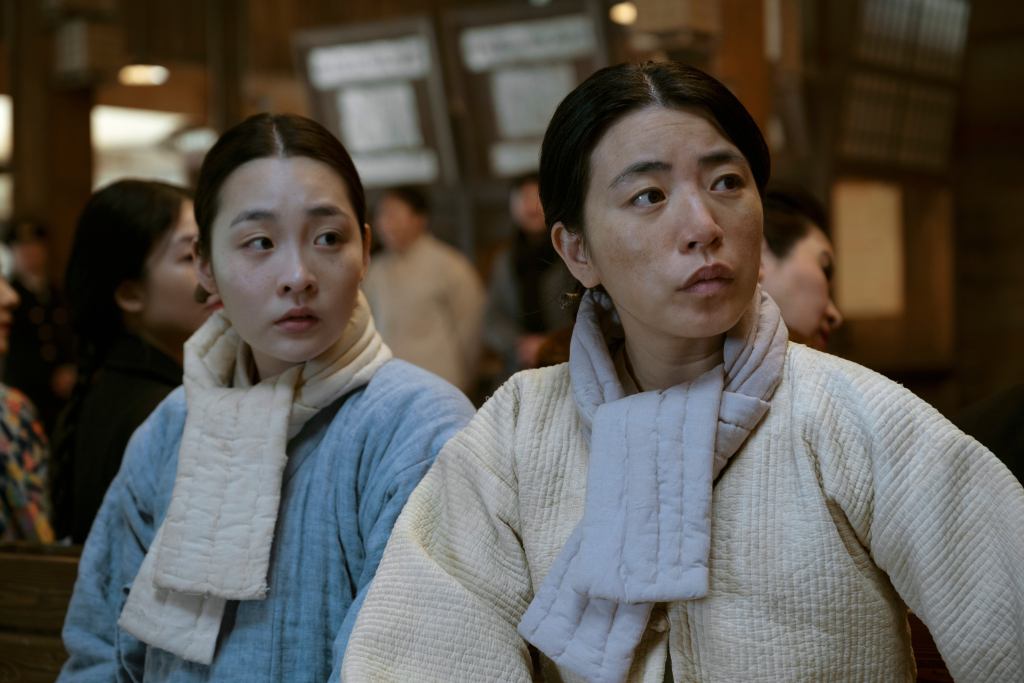
Hello and welcome back to another TV and movie review! I hope all is well with you and yours. Can you believe we’re already halfway through the year? I’ll blink, and before we know it, Turkey Day will be upon us. But before that, let’s slow down and savor this week’s historical drama, Pachinko.
Honestly, with a title like Pachinko, I had no clue what to expect. I remember seeing clips of the show floating around the internet years back, but I quickly forgot about them. Then Father’s Day rolled around, and here we are.
Pachinko follows several generations of one Korean family from Japanese-occupied Korea all the way to 1989. At its center is Sunja, a young woman from Busan whose life is forever changed by a series reckless decision.
Sidenote: Sunja’s mother visits a medium in hopes of lifting the curse that keeps killing her children in infancy. Fine. The baby survives. Great. But then what? If the ancestors are cruel enough to kill babies, what’s stopping them from ruining the rest of the child’s life? If I were superstitious enough, I would believe they did ruin Sunja’s life, or at least tried their best to. Sis didn’t exactly have the easiest life.
Sunja Is Lucky. Very Lucky.
I don’t want to like Sunja. I want to say she’s irresponsible.
She ignored her mother’s warning and nearly gets herself assaulted.
How was she planning to raise a child on her own had Isak not stepped in?
She undermines authority constantly.
Selling alcohol despite knowing the risks.
She refused to learn Japanese despite being told how useful an education would be.
And because of that stubbornness, she exposed her son to danger acting as her translator talking to the professor, a known dissident.
Frankly, there is nothing extraordinary about Sunja.
But maybe that’s the point.
She’s not a genius.
She’s just foolheartedly stubborn.
And somehow, through sheer luck and the kindness of others, she survives.
But I guess that’s what makes Sunja special.
History isn’t always changed by geniuses. Sometimes it’s carried on the backs of stubborn old ladies who simply refuse to die.
Solomon Needs to Sit Down Somewhere
I don’t like Solomon.
His character screams confused, entitled brat.
Why did he expect the elderly landowner, Han Geum-ja, to jump because he said jump? Because he was Korean? The bank had already offered her absurd amounts of money. Was he honestly the only Korean employee capable of negotiating?
The irony is that Solomon was doing to her exactly what the Japanese bankers had done to his own family.
He discounted her experience.
Sometimes money doesn’t answer all ills.
Besides, had she taken that money, how much longer did she realistically have left? She clearly valued something more than money.
You could argue that the money would then go to her kids, but then I would ask, where are these said kids? She herself said they rarely visit. Ungrateful brats!
If I were her and had taken the money, I would’ve enjoyed some of it first and then left some for the grandkids, paid for their education, secured their living situation, and then some to indulge in a hobby or three. But I wouldn’t want them to become spoiled chaebols.
Moral of the story: I don’t live for my kids.
But back to Solomon.
When his manipulative little enlistment scheme failed, my guy went as far as hiring thugs to destroy her property.
It was only at the table that he finally discovered self-respect and told her not to sign.
Then later, in season two, when his plans fell through AGAIN, this fool went back to bother the old lady again.
Like, bro, can you just leave her alone?
I hate time wasters.
Suffering Doesn’t Automatically Make Us Compassionate
I genuinely wanted to remain neutral when it came to racial and political topics.
But watching Pachinko made me think about some recent events and some experiences I’ve had in my own life.
And if I’m being honest, I found myself wrestling with bitterness.
I wanted to ask:
“How can people who know suffering turn around and mistreat others?”
But then I had to confront a harder question.
Does suffering automatically make us compassionate?
Or does it simply make us human?
Because if I’m being fair, I’ve been on the receiving end of prejudice.
But I’ve also returned that same energy.
Maybe pain doesn’t teach compassion.
Maybe compassion is something we choose.
No group has a monopoly on suffering, and no group is exempt from prejudice.
History has shown that being oppressed doesn’t automatically make people virtuous.
People are just people.
Some stop the cycle.
Others pass it on.
Most of us do a little of both.
Final Thoughts
Pachinko is beautifully filmed. The acting is wonderful, and the story spans generations in a way that feels intimate and tragic.
But despite all that, the drama felt like any another drama.
I respected it more than I loved it.
Maybe that’s enough.
Anypoops, I give Pachinko 3 out of 5 rose petals.
Tell me what you think.
Am I being too harsh?
Leave a Reply